Don't Just Know It — Become It
Matthew 6:33 Psalm 139:23–24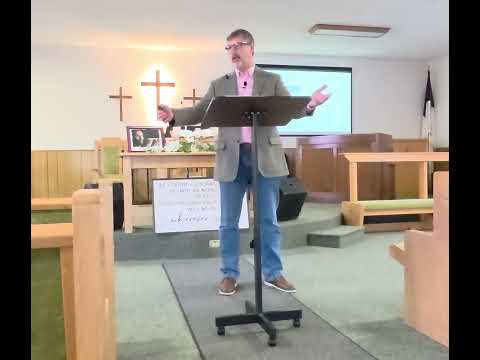
Little Johnny pressed coins into the preacher's hand after the service. "My daddy says you're the poorest preacher we've ever had." Johnny thought "poorest" meant his bank account. His dad was talking about the preaching.
A lot of us end up just like Johnny.
We've heard the verses. We have all the information.
But there can be a massive gap between knowing the truth
and letting it actually change who we are.
Matthew 6:33 is one of the most familiar verses in the New Testament. But what does it actually mean to live it? Pastor Curtis Hight digs into the Sermon on the Mount, pushes back on prosperity gospel proof-texting, and lands on one challenge: don't just know it, become it.
Before answering what it means to seek God's kingdom, Pastor Hight addresses what it doesn't mean — directly challenging the prosperity gospel, which uses Bible verses out of context to argue God guarantees material wealth.
The problem"They leave out the rest of the context. They just use portions of it and make their point — to get everyone to give more."
Take Mark 10:29–30 — the hundredfold return passage. The verse includes in the list: homes, brothers, sisters, children, fields — along with persecutions.
Nobody preaches the hundredfold persecution.
But it's right there in the text.
Jesus's actual promise in John 16:33: "In this world you will have trouble. But take heart — I have overcome the world." He promises peace — not everything we want.
Matthew 6:33 sits in the middle of the Sermon on the Mount — chapters 5 through 7 — which is a continuous whole. Read in context, Jesus is painting a picture of what a disciple looks like:
- Matt 5:13–14 "You are the salt of the earth. You are the light of the world." — disciples' identity.
- Matt 6:19 "Do not store up treasures on earth." — the verse prosperity teachers skip.
- Matt 6:24 "No one can serve two masters." — kingdom and wealth pursuit cannot coexist.
- Matt 6:33 "Seek first his kingdom and his righteousness, and all these things will be given to you as well."
Seeking first the kingdom means
focusing on what God wants you to focus on
and staying away from what he's asked you to stay away from —
day after day, in everything you do.
Pastor Hight closes by asking everyone to pull out their keys — house, car, maybe even the church. Those keys represent the things you control.
Pastor Hight"This week — every time you reach for those keys — ask yourself: who is holding the keys to my heart?"
Who is holding the keys to my heart?
Is it what I can get out of this life — or is it his kingdom?
The weekly homework: read Matthew chapters 5, 6, and 7. Not just to get information — study them. Let them begin to mold you into the person God created you to be. Don't just read it. Let it change you.
- Matthew 6:33 "Seek first his kingdom and his righteousness, and all these things will be given to you as well." — the central verse.
- Matthew 5:13–14 "You are the salt of the earth. You are the light of the world."
- Matthew 6:19,24 "Do not store up treasures on earth. No one can serve two masters."
- Psalm 139:23–24 "Search me, O God, and know my heart. See if there be any wicked way in me, and lead me in the way everlasting."
- John 16:33 "In this world you will have trouble. But take heart — I have overcome the world."
- Romans 8:16–17 "The Spirit testifies we are God's children — heirs of God and co-heirs with Christ."
Read in its full Sermon on the Mount context, Jesus is describing what a disciple looks like: salt and light, not performing their faith for others, not worshipping wealth, trusting God to provide.
The prosperity gospel says yes, using verses out of context. But Mark 10:29–30 — one of its key proof texts — includes in the hundredfold list: along with persecutions. Nobody preaches the hundredfold persecution. It's right there in the text.
Little Johnny had the right information but the wrong interpretation. We do the same with Scripture — we hear the words, get all the information, and still have a massive gap between knowing the truth and letting it change us.
Most people who need the gospel will never walk through a church door to read a Bible. They're reading you — at the grocery store, in the office, during a crisis. When you become the word, you make the invisible God visible.
Test Yourself
Don't Just Know It — Become It · Pastor Curtis Hight · May 3, 2026
Join Us This Sunday
Paris Church of the Nazarene · Every Sunday at 10:45 AM
450 Houston Avenue, Paris, Kentucky 40361
RightNow Media — Free for Our Church Family
Free Discipleship Library
As a member of Paris Church of the Nazarene, you get free access to RightNow Media — a massive streaming library of Bible studies, kids' shows, leadership resources, and faith-based content for every stage of life.
It's like the Netflix of Christian media... and it's completely free for you.

Don't Just Know It —
Become It
Matthew 6:33
Psalm 139:23–24
Most of us know Matthew 6:33. We could probably recite it in our sleep: "But seek first his kingdom and his righteousness, and all these things will be given to you as well." We've heard it. We've taught it. We may even have it on a coffee mug.
But here's the question Pastor Curtis Hight brings to this sermon: What does it actually mean to seek his kingdom and his righteousness? Is it just a nice thing to say to feel a little more spiritual? Or is it a blueprint for how we're to handle our everyday lives?
It's one thing to have a verse in your head.
It's another thing entirely for that verse to get into your hands and your feet —
to where you live it out day after day.
There's always a gap between knowing the truth and understanding it to the point where it actually changes who you are. That gap is what this sermon is about. And closing it takes more than information. It takes transformation.
Don't just know it. Become it.
After a Sunday morning service, a preacher was making his way to the back of the church to greet people as they left. After shaking hands with a few adults, he came across little Johnny — the seven-year-old son of one of the deacons — standing there with a huge grin, holding out his hand.
As the preacher shook it, he felt something small and hard pressed into his palm. He looked down: a coin. "Johnny, what's this?" "It's money. It's for you." "I don't want to take your money, Johnny." Johnny looked up at him and said:
Little Johnny"But I want you to have it. My daddy says you're the poorest preacher we've ever had, and I want you to have it."
Johnny was confidently wrong. He had the right information — he'd heard his dad's exact words. But he had the wrong interpretation. He heard poor and thought about a bank account. He didn't realize his dad was talking about the preaching, not the paycheck.
A lot of us could end up being a lot like Johnny.
We've been in church a while. We've heard the verses.
We have all the information.
But there can be — and many times has been —
a massive gap between knowing the truth
and understanding it to the point where it changes who we are.
Before answering what it means to seek God's kingdom first, it's worth knowing what it doesn't mean. There are preachers who teach week after week that if you just believe in Jesus and put your faith in him, he will give you anything you want. The prosperity gospel. And they have a list of verses they use.
Verses like: Deuteronomy 8:18 ("he gives you power to get wealth"), Malachi 3:10 (the floodgates of heaven), Matthew 7:7 ("ask and it will be given"), Mark 10:29–30 (receive a hundredfold), 2 Corinthians 8:9 ("through his poverty you might become rich"), 1 John 5:15, 3 John 1:2.
The problem is they leave out the rest of the context. Take Mark 10:30 — they use it to say give to the church and receive a hundredfold in return. But look at what comes after the colon:
Mark 10:29–30 (full verse)"No one who has left home or brothers or sisters or mother or father or children or fields for me and the gospel will fail to receive a hundred times as much in this present age — homes, brothers, sisters, mothers, children, and fields — along with persecutions — and in the age to come, eternal life."
No one wants a hundredfold persecutions. And physically, it's impossible to have 100 mothers. The hundred times over refers to the spiritual family you gain in Christ — the brothers and sisters and homes you find across the church everywhere you go. That's real. But it's not a financial promise.
Jesus never said: "I'm going to give you everything."
He said: "I will give you peace."
And that peace of God is what brings comfort in knowing
we are his and he is ours.
John 16:33 — "In this world you will have trouble. But take heart. I have overcome the world." Not no trouble. Peace through it. That's the actual promise. And Romans 8:16–17 makes it plain: we are heirs of God and co-heirs with Christ — if indeed we share in his sufferings in order that we may also share in his glory.
Matthew 6:33 sits right in the middle of what we call the Sermon on the Mount — chapters 5, 6, and 7. Too often we pull it out and teach it by itself. But it's part of a single continuous message Jesus gave, and understanding it requires knowing what surrounds it.
In Matthew 5:13–14, Jesus tells his disciples who they are: "You are the salt of the earth... You are the light of the world." That's the identity. Not what they should try to become — what they already are as his followers. Disciples who preserve life and provide truth to a world stumbling in darkness.
Then comes the conduct. Matthew 6:1: don't practice your righteousness in front of others to be seen. Verse 5: when you pray, don't be like the hypocrites. Verse 16: when you fast, don't look somber to show it. Verse 19: don't store up treasures on earth. Verse 24: no one can serve two masters. Verse 25: don't worry about your life.
Matthew 6:33 (NIV)"But seek first his kingdom and his righteousness, and all these things will be given to you as well."
The all these things he refers to? He'd just been talking about food, clothing, the necessities of life. If you focus on what God wants you to focus on — and stay away from what he's asked you to stay away from — then that's when you understand what seeking first really means. It's not a formula for getting what you want. It's a reorientation of what you want.
We have a tendency to give God a little bit of our time,
maybe some of our money,
and think we've done our part.
But Jesus isn't looking for our help.
He doesn't need our help. We need him.
Seeking first his kingdom means living as salt and light. It means praying, fasting, and giving without making a show of it. It means not serving money as your master. It means releasing worry. It means reading Matthew 5–7 not just for the information, but to be shaped by it — to be molded by what it says into the person God created you to be.
If we want to move from knowing the word to becoming it, we have to be willing to let God do what David asked him to do in Psalm 139. Not just read the psalm — actually pray it.
The courtesy translation:
Don't just know it. Become it.
Pastor Hight closes with a simple, physical challenge. Reach into your pocket or purse and pull out your keys. House key. Car key. Maybe an office key. Maybe a key to the church.
Those keys represent the things you control — the things you have access to, the things in your domain.
This week, every time you reach for those keys —
ask yourself one question:
Who is holding the keys to my heart?
Is it what I can get out of this life?
Or is it his kingdom?
Serving God half-heartedly, or just knowing facts without putting them into action, leads to spiritual stagnation. It makes us easily swayed back into the culture we live in. People don't read Bibles. They read you. And when you become it, your life becomes the physical evidence that Jesus is real and his promises are true.
Don't just know it. Become it.
- Matthew 6:33 "But seek first his kingdom and his righteousness, and all these things will be given to you as well."
- Matthew 5:13–14 "You are the salt of the earth... You are the light of the world."
- Matthew 5–7 The full Sermon on the Mount — the complete context for what it means to seek God's kingdom first.
- Psalm 139:23–24 "Search me, God, and know my heart. Test me and know my anxious thoughts."
- John 16:33 "In this world you will have trouble. But take heart. I have overcome the world."
- Romans 8:16–17 Co-heirs with Christ — sharing in his sufferings in order to share in his glory.
- Mark 10:29–30 The hundredfold promise — in full context, including persecution.
Matthew 6:33 is not a prosperity promise — it's a reorientation of priorities. It sits in the middle of the Sermon on the Mount (chapters 5–7), where Jesus defines what it looks like to live as his disciple. The verse is addressed to people who are already worried about the necessities of life (food, clothing, the basics), and Jesus tells them: stop making those things your primary pursuit.
The "all these things will be given" at the end refers to those necessities — not wealth, not everything you've ever wanted. It's a promise that when you reorient your life around God's priorities, he provides what you actually need.
The prosperity gospel takes real Bible verses and strips them of context to make a promise God never made — that faith in Jesus leads to financial wealth. The verses it uses are real. The interpretations are not.
The clearest correction comes from the very mouth of Jesus. John 16:33: "In this world you will have trouble. But take heart. I have overcome the world." He didn't say I will remove your trouble. He said he has overcome it, and his peace is available through it.
Romans 8:16–17 says we are co-heirs with Christ — but co-heirs who share in his sufferings in order to share in his glory. Suffering is in the package. Prosperity theology skips it.
Knowing the Bible means having information — verses memorized, facts about theology, familiarity with stories. Becoming the Bible means transformation — the word has moved from your head into your hands and feet, into how you actually live.
The sermon gives three markers of the gap: (1) Information without transformation is delusion — being a hearer only is a form of self-deception (James 1). (2) You are the only Bible some people will ever read — the world watches your life, not your theology. (3) Knowing doesn't bring peace, but becoming does — real rest comes from seeking the kingdom, not just knowing about it.
This is one of the tension points the sermon addresses directly. Romans 8:38–39 says nothing can separate us from the love of God — and that's true. But the Bible also makes clear we can choose to walk away from him.
Otherwise he would be a controlling God who overrides human will. But that's not who he is. When Jesus called disciples, he said "come follow me" — and gave them a choice. Some walked away sad. God's love remains. His door remains open. But he doesn't force anyone through it. That's why seeking his kingdom is a daily, active choice — not a one-time transaction.
A Christian is someone who believes in Jesus, has confessed with their mouth that Jesus is Lord, and believes God raised him from the dead. A disciple goes further — they repent (turn away from the old life and change direction), and then walk in his footsteps daily.
- Believing in Jesus is necessary — but it's the starting line, not the finish line
- Repentance isn't a moment, it's a direction — turning away from sin and toward God
- Discipleship means living as salt and light — preserving life and bringing truth to a darkened world
- A disciple knows their purpose: not to look spiritual, but to be it
Test Your Understanding
Don't Just Know It — Become It · Pastor Curtis Hight · May 3, 2026
Join Us This Sunday
Paris Church of the Nazarene · Every Sunday at 10:45 AM
450 Houston Avenue, Paris, Kentucky 40361

Call Us Today

Email Us

Our Location
450 Houston Avenue, Paris, KY 40361


Copyright © 2026 All Rights Reserved.
Paris Church of the Nazarene is a 501(c)(3) nonprofit organization. Our mission is to "Go Out! Share Hope".
Legal Name - Paris Church of the Nazarene
EIN - 41-5234223
Call Us Today
Email Us
Our Location
450 Houston Avenue, Paris, KY 40361
Copyright © 2026 All Rights Reserved.
Paris Church of the Nazarene is a 501(c)(3) nonprofit organization. Our mission is to "Go Out! Share Hope!".